
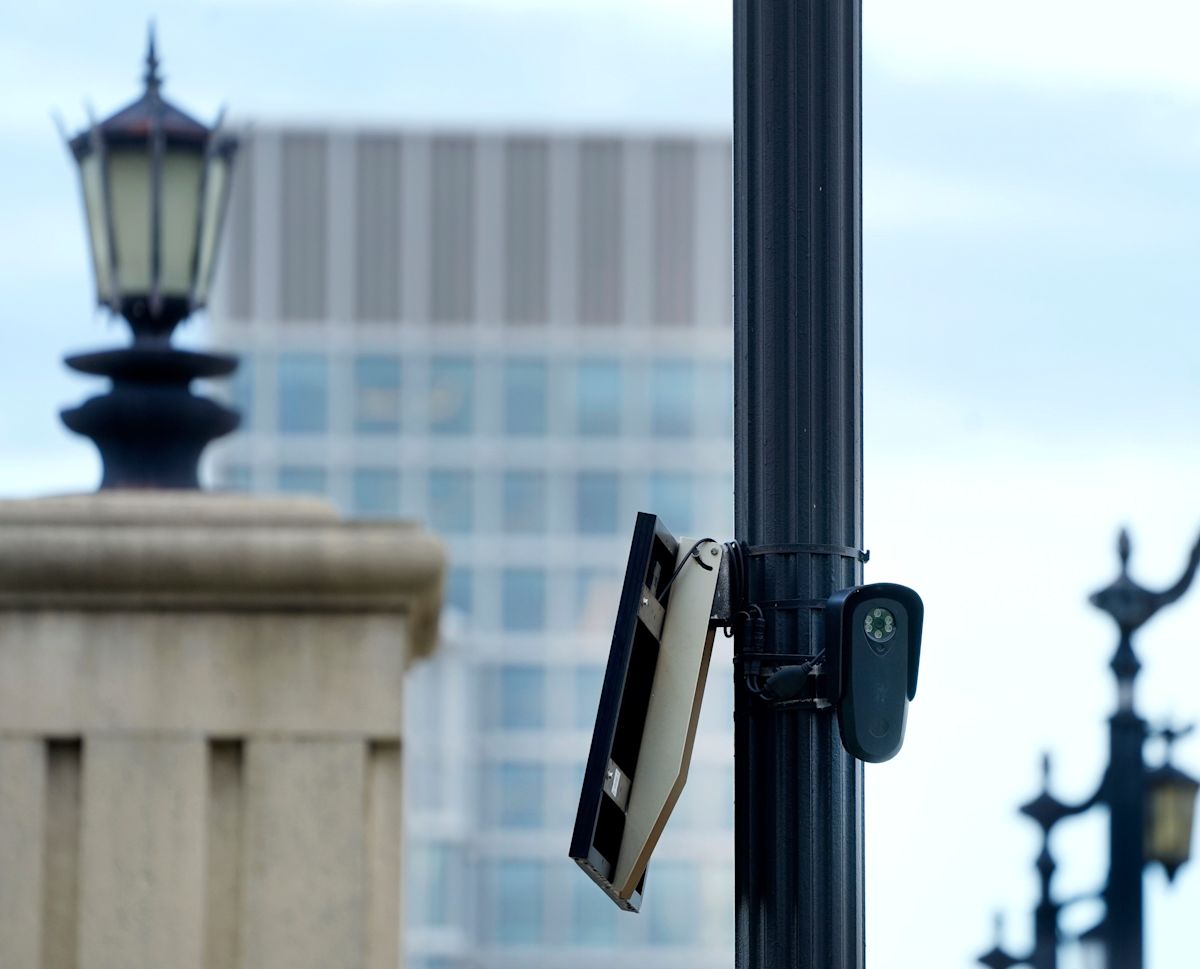
Local governance and state transportation policies have converged in Alachua County as officials and community members reexamine the use of automated license plate readers across North Florida. The discussion reflects a broader examination of law enforcement surveillance technology, balancing its documented investigative value against the growing public demand for privacy protections and operational transparency.
The issue gained significant momentum after the Florida Department of Transportation announced an administrative shift on August 31, 2026. The state agency revoked its general use permits for automated license plate reader systems stationed within state highway rights-of-way. Following the decision, state transportation officials gave regional law enforcement agencies a 30-day timeline to dismantle and remove the affected equipment from state-managed corridors.
In Alachua County, Sheriff Chad Scott quickly assessed the local network to determine how the state order would affect county operations. Scott identified 27 automated license plate readers that met the criteria for removal under the revised state highway guidelines. Although these designated devices must come down, other automated cameras situated outside state-controlled rights-of-way are slated to remain operational throughout the area.
The state directive arrived shortly after grassroots efforts began questioning the regulatory basis of the camera networks. Sam Cornell, an independent researcher and surgical coordinator in organ recovery living in Gainesville, had spent several months during the summer reviewing the county's camera systems through Florida public-records requests. A central query in his preliminary findings focused on whether local devices possessed the required state transportation permits prior to the widespread permit revocation.
Before the state ordered the cameras removed, Cornell brought his findings directly to regional policymakers. Addressing the Alachua County Commission, he called on all five county commissioners to examine the local license plate reader program more thoroughly. Rather than demanding an immediate termination of the technology, Cornell urged county leaders to establish robust operational standards to govern the system.
Cornell outlined several specific policy safeguards during his presentation. These proposed guardrails included reducing data retention timelines, establishing independent audit protocols, providing clear disclosure regarding which entities can access captured records, and presenting a transparent fiscal accounting of the total costs associated with the camera network. All five members of the county commission agreed that the program warranted a closer evaluation.
Proponents of automated license plate readers emphasize that the technology serves as a critical investigative mechanism for law enforcement agencies. Automated cameras photograph passing vehicles and cross-reference license plates against databases to quickly alert officers to vehicles linked to active investigations. Proponents note that these systems frequently assist law enforcement in locating stolen automobiles and aiding missing-person searches.
Sheriff Scott confirmed that the surveillance tools have played an important role in resolving major local offenses. According to the sheriff, data gathered by license plate readers has helped his investigators solve homicides, investigate armed robberies, and locate missing individuals. Neighboring jurisdictions report similar outcomes; Lake County law enforcement compiled and shared approximately two dozen case summaries documenting how the camera technology supported successful police investigations.
Despite the investigative successes, the widespread deployment of vehicle-tracking technology has sparked significant civil liberties concerns. Because license plate readers automatically photograph every passing automobile, the vast majority of data collected belongs to individuals who have no connection to criminal activity. Everyday drivers traveling to work or transporting children to school are regularly logged by the network.
Sheriff Scott publicly acknowledged this civil liberties dilemma, noting that the overwhelming majority of citizens captured by the cameras are law-abiding community members. Scott stated that everyday commuters are not criminal suspects and should not be treated as such by automated law enforcement infrastructure. The sheriff emphasized that the critical questions facing the community center on what information is recorded, how long the files are stored, who holds access permissions, and what standards define a lawful query.
Local researchers and privacy advocates note that removing cameras solely based on roadway boundaries does not fully resolve the underlying policy questions. Because the state's recent order applies only to specific highway rights-of-way, it represents a jurisdictional boundary rather than a comprehensive privacy framework. As long as cameras remain active on other thoroughfares, questions surrounding data governance and civil liberties persist.
Advocates monitoring the program have commended the Alachua County Sheriff’s Office for maintaining open communication during the records examination process. When public records concerning the camera program were formally requested, the sheriff's office fulfilled the request free of charge within approximately one week. This prompt access to documentation has allowed community members and officials to evaluate the program based on administrative evidence and concrete data.
Engagement between residents and county law enforcement is expected to continue as discussions expand. Cornell indicated plans to consult with additional representatives from the Alachua County Sheriff’s Office to evaluate internal procedures and review data-handling standards, expressing a commitment to share any positive findings with the public.
As Alachua County navigates the state-mandated removals and reviews its local surveillance footprint, the community faces the task of crafting balanced oversight policies. Observers note that preserving public trust requires establishing clear legal and civic boundaries, ensuring that advanced investigative tools remain accountable to the public they are deployed to protect.








(0)