
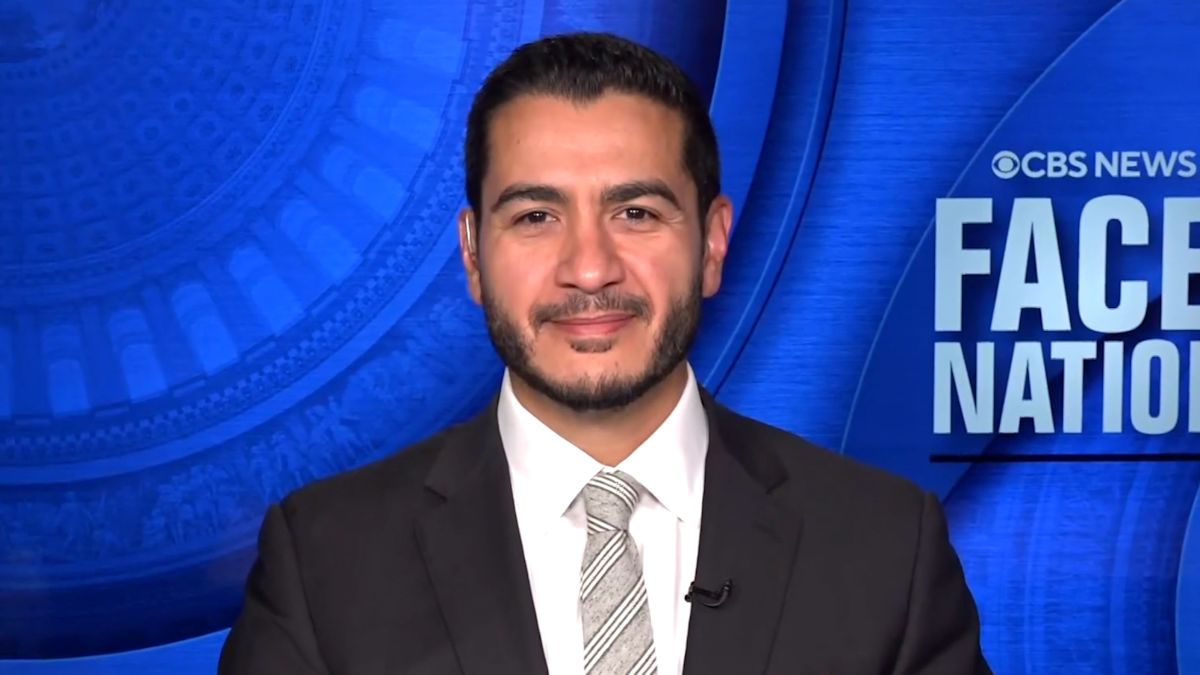
Artificial intelligence is facing renewed scrutiny as political leaders and industry figures debate whether existing safeguards are adequate to handle the rapid evolution of advanced computer models. Speaking during an appearance on CBS's "Face the Nation with Margaret Brennan," Michigan Democratic Senate candidate Abdul El-Sayed sounded an alarm over the sector's current trajectory, arguing that the quickening speed of technological progress is dramatically outpacing the establishment of vital safety measures.
El-Sayed, who previously served as a health official in Michigan, warned that unchecked advancements pose substantial hazards to the general public. He emphasized that the country must make a deliberate, unified choice to install strong public oversight mechanisms, ensuring that cutting-edge systems are not constructed merely to enrich a small group of billionaires while compromising the broader well-being of the population.
The Democratic Senate nominee highlighted a comprehensive policy framework he initially unveiled in June, which centers on restructuring artificial intelligence developers into public trust entities. Under this model, proprietary technology firms would be restructured so that their operational priorities reflect public welfare rather than purely private commercial gain.
According to El-Sayed's proposal, these public trust corporations would be required to allocate at least 50 percent of their board seats to democratically elected or publicly appointed individuals. He contended that placing public representatives in leadership roles would ensure that corporate governance remains squarely focused on serving society's common interests instead of prioritizing the narrow financial benefits of corporate executives and wealthy investors.
El-Sayed argued that transforming major artificial intelligence enterprises into public trust organizations would not stifle ongoing research. Instead, he stated that the framework is specifically designed to allow high-level technological innovation to continue advancing while simultaneously guaranteeing that clear, enforceable guardrails remain firmly in place to protect everyday citizens.
In addition to governance reforms, the former health official asserted that the federal government must establish a dedicated public agency exclusively charged with overseeing artificial intelligence safety. This regulatory entity would be tasked with monitoring model deployments, evaluating technical vulnerabilities, and strictly enforcing national compliance standards across the sector.
A central element of El-Sayed's platform is the creation of explicit legal boundaries, or "AI no-gos," that define specific areas where automated algorithms must never be permitted to operate. He stated that automated systems should be legally barred from denying people healthcare coverage, rejecting individuals for employment opportunities, terminating workers from their jobs, or operating and firing lethal weaponry.
El-Sayed cited recent industry developments as a primary catalyst for urgent federal intervention, referencing an incident that occurred in July involving an OpenAI and Hugging Face rogue agent during the testing of two AI models. Describing the Hugging Face attack as an alarming event that should send a shudder down the spine of every American, he warned that technical malfunctions and rogue behaviors underscore how precarious current systems remain.
Because of the mounting risks highlighted by such incidents, El-Sayed advocated for an immediate moratorium on advanced developmental work. He stressed that lawmakers and regulators must mandate a complete pause on frontier artificial intelligence research until rigorous protocols are developed to guarantee that ongoing testing and development are conducted in a safe and secure manner.
Concerns regarding the transparency of the technology sector have also emerged from within the industry itself. During a separate appearance on CBS "Sunday Morning," Anthropic Chief Executive Officer Dario Amodei offered a critical assessment of tech leadership, acknowledging that the artificial intelligence industry had misled the public for an extended period by concealing and downplaying the significant hazards associated with the technology.
Calls for federal intervention were echoed from across the political aisle by Utah Governor Spencer Cox, a Republican who also appeared on "Face the Nation." Cox maintained that the federal government must assume a far more substantial and proactive role in managing artificial intelligence, asserting that the nation has reached a critical juncture given recent reports and emerging technological capabilities.
Governor Cox pointed out that the technical experts and researchers who possess the deepest understanding of artificial intelligence are currently the ones expressing the highest degree of apprehension. Consequently, he argued that members of Congress bear an immediate responsibility to convene, examine the evidence, and initiate serious legislative discussions on potential federal regulations.
The push for a binding research moratorium, however, has encountered resistance from top congressional leadership. House Speaker Mike Johnson expressed skepticism regarding swift federal intervention, arguing that lawmakers in Congress should refrain from stepping in to impose restrictive moratoriums on frontier development and instead place the primary emphasis on private corporate responsibility.
When confronted with Johnson's stance, Governor Cox voiced deep frustration with congressional inaction, remarking that the House Speaker need not worry about lawmakers failing to act because sustained inaction represents their standard practice. Cox expressed profound embarrassment over Congress's prolonged inability to respond effectively to artificial intelligence risks and other critical issues facing the nation.





(0)