
Throughout modern history, September 13 has served as a crossroads for transformative developments spanning governance, armed conflict, diplomacy, civil rights, and cultural milestones. From the fiery naval battles of the nineteenth century to modern natural disasters and diplomatic breakthroughs, this single calendar day holds significant historical resonance across the globe.
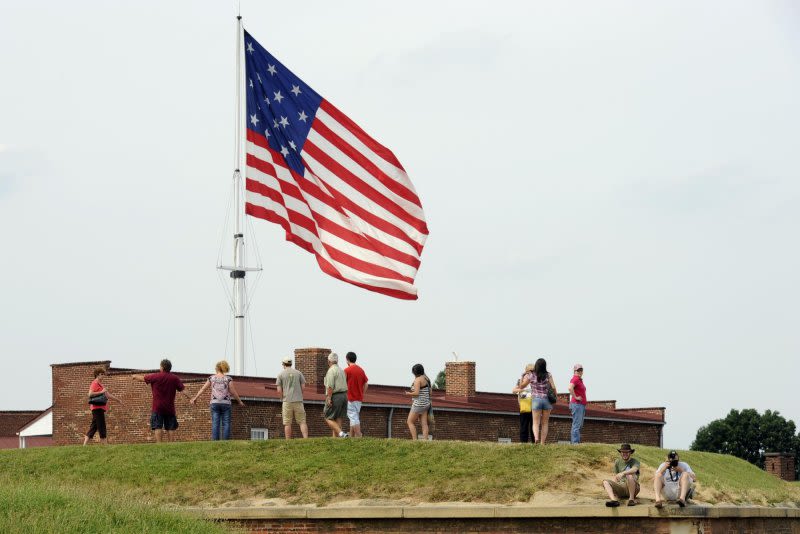
The date is perhaps most famously remembered in American lore for an event that unfolded during the War of 1812. On September 13, 1814, British military forces initiated a relentless bombardment against Fort McHenry in Baltimore, Maryland. Witnessing the assault through the long night, an American lawyer and poet named Francis Scott Key was moved to compose the verse that would eventually become the national anthem of the United States, titled "The Star-Spangled Banner."
The maritime engagement at Fort McHenry represented a crucial stand against British forces. The sight of the American flag remaining aloft over the garrison amidst heavy bombardment provided Key with the vivid imagery captured in his lyrics, creating an enduring symbol of American resilience that continues to be celebrated more than two centuries later.
More than a century after the defense of Fort McHenry, September 13 bore witness to another dramatic wartime event across the Atlantic. In 1940, at the height of World War II, the German aerial Blitz over London brought destruction directly to the British monarchy when a targeted bombing ruined the private chapel located within Buckingham Palace.
The royal residence proved to be a frequent target of enemy operations, sustaining a total of nine attacks throughout the course of the war. Just ten days after the destructive strike on the chapel, King George VI addressed the public, firmly condemning the destructive "wickedness against which we fight" and reaffirming national resolve in the face of ongoing air raids.
The date also marks a watershed moment in the history of American women in politics. On September 13, 1948, Republican politician Margaret Chase Smith achieved a decisive electoral victory in Maine, winning a seat in the United States Senate.
With this triumph, Smith established a historic milestone by becoming the very first woman to serve in both chambers of the U.S. Congress, having previously represented her home state in the House of Representatives. Her achievement paved the way for subsequent generations of female lawmakers seeking national leadership positions.
In 1971, September 13 turned tragic within the American correctional system when New York state authorities ordered an armed operation to reclaim control of the Attica Correctional Facility. The state prison had been engulfed in a massive and chaotic inmate uprising that commanded national attention.
The heavily armed tactical assault successfully restored state control over the facility, but it came at a devastating cost. A total of 43 people lost their lives during the violent confrontation, making the Attica incident one of the deadliest and most controversial prison revolts in United States history.
The date has also brought rare moments of diplomatic hope to the Middle East. On September 13, 1993, Israeli Prime Minister Yitzhak Rabin and Palestine Liberation Organization Chairman Yasser Arafat gathered on the White House grounds for a historic ceremonial signing.
Assisted by international mediators, the two long-standing adversaries formally signed a declaration of principles aimed at establishing a framework for Palestinian self-rule. The agreement served as a critical foundation for bilateral dialogue and a temporary bridge toward regional peace efforts.
In popular culture, September 13 marks the somber passing of one of music's most influential figures. In 1996, celebrated hip-hop artist and rapper Tupac Shakur died from his wounds in Los Angeles. His death came six days after he was critically injured in a drive-by ambush shooting on September 7.
Five years later, in 2001, the date marked an essential step toward national recovery following the devastating September 11 terrorist attacks. On September 13, federal authorities permitted commercial airline carriers to resume flights across the country, subjecting airports and travelers to stringent new security protocols designed to prevent future aviation catastrophes.
International human rights made significant strides on September 13, 2007, when the United Nations General Assembly officially adopted the landmark Declaration on the Rights of Indigenous Peoples. Although the United States cast a dissenting vote, the non-binding resolution represented a watershed international instrument designed to eradicate discrimination and protect the collective rights of Indigenous populations regarding culture, language, identity, education, employment, and healthcare.
Nature unleashed its fury on the same date in 2008, when the catastrophic Hurricane Ike slammed into the Texas Gulf Coast. Packing sustained winds of 110 miles per hour and torrential rains, the storm heavily battered Galveston and Houston, triggering the evacuation of approximately one million people and cutting electrical power to millions more. The storm's path of destruction ultimately claimed more than 100 lives across the United States and roughly 75 fatalities in Haiti.
From the creation of national anthems and historic political triumphs to devastating storms and solemn tragedies, September 13 reflects a broad spectrum of human experience. The events commemorated on this day continue to offer profound lessons about resilience, governance, and the unpredictable turns of global history.






(0)