
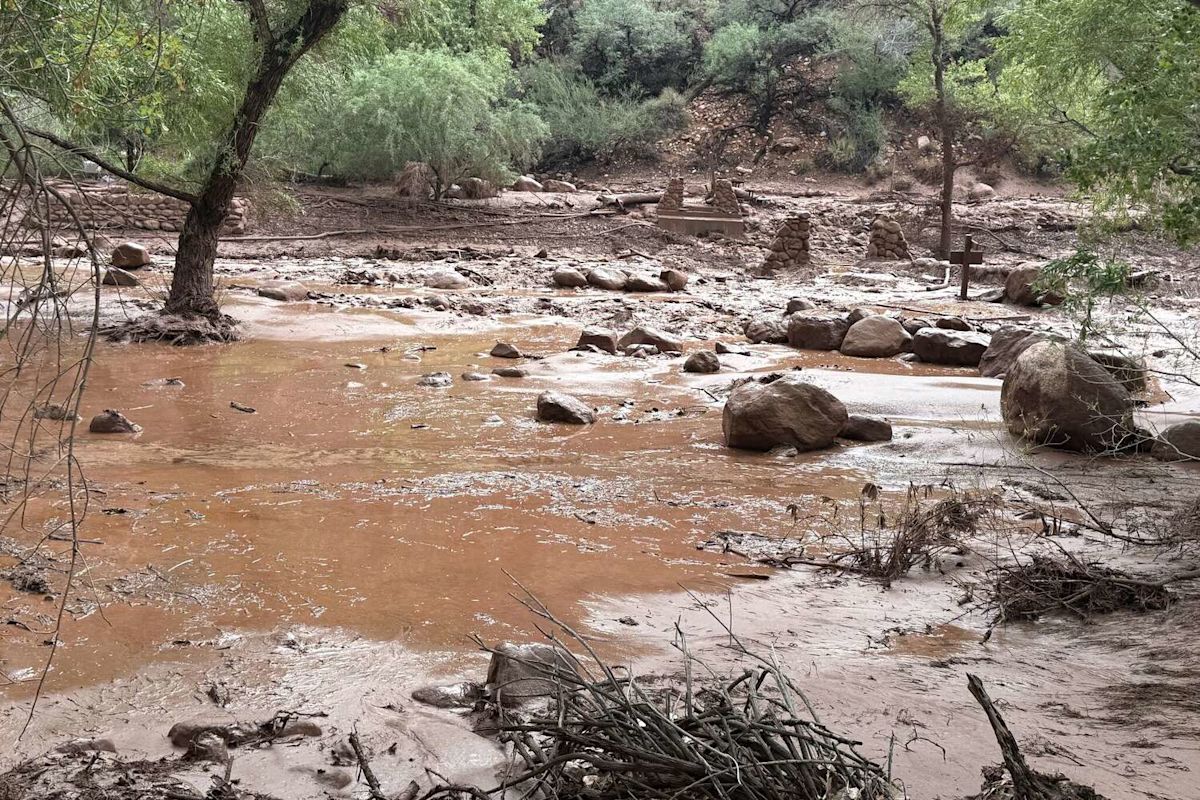
A catastrophic flash flood in Grand Canyon National Park has left over 20 individuals missing or unaccounted for, as the aftermath of the disaster continues to unfold. The calamity struck on Saturday afternoon when a sudden, intense storm unleashed a torrent of rain over the canyon's recently burned areas.
The storm, which delivered more than an inch of rain in a mere hour, triggered a rapid rise in floodwaters. Within 10 minutes, the water levels had surged over five feet, overwhelming the bridges across Bright Angel Creek and forcing the closure of one of the park's most challenging trails. A flash flood watch was promptly issued for the Grand Canyon, extending through Monday, as forecasters warned of further dangerous downpours in Arizona and Utah.
The National Park Service (NPS) reported that 62 campers and hikers were airlifted out of the affected area by Sunday morning. However, the situation remained dire as the park service indicated that over 20 individuals could be missing. The NPS is urging anyone with information regarding hikers or backpackers in the Bright Angel Creek corridor on August 29 to come forward, including those who had reservations at the affected campgrounds.
Park officials have closed Phantom Ranch, the Bright Angel campground, the Phantom Ranch canteen, and cabins, as well as the North Kaibab Trail. The Colorado River, which saw its waters rise by 8 feet in just one hour, has been closed to traffic due to debris in the waterway. The Black Bridge and Silver Bridge crossings over the Colorado River were also shut down.
The park service warned that additional closures may be necessary as the threat of thunderstorms and heavy rainfall persists. Cell phone service in much of Northern Arizona is spotty, with the park service noting that it is "nearly impossible" to maintain a signal in the Grand Canyon area.
The flash flood comes a year after the Dragon Bravo Fire ravaged the Grand Canyon's North Rim, destroying a historic lodge and altering the landscape. The intense rain on the recently burned terrain has been identified as a key factor in the flash flood, as such conditions can trigger debris flows—a mixture of mud, trees, and rocks.
The National Weather Service has warned of a slight risk of excessive rainfall capable of triggering flash flooding across the Four Corners region on Monday, with a moderate risk in south-central Utah. Short-duration rain bursts, such as the thunderstorm that caused the Grand Canyon flood, are more likely to trigger debris flows than long-duration moderate rainfall.
A weather station along Bright Angel Creek recorded 1.17 inches of rain between 2 and 3 p.m. on Saturday, far exceeding the National Weather Service's flash flood guidance for the Grand Canyon. This prompted the agency to issue a flash flood warning.
As the search and rescue operations continue, the community is grappling with the tragic loss of life and the potential for more to come. The Grand Canyon, a natural wonder that attracts millions of visitors each year, has once again demonstrated the fragility and power of nature.









(0)