
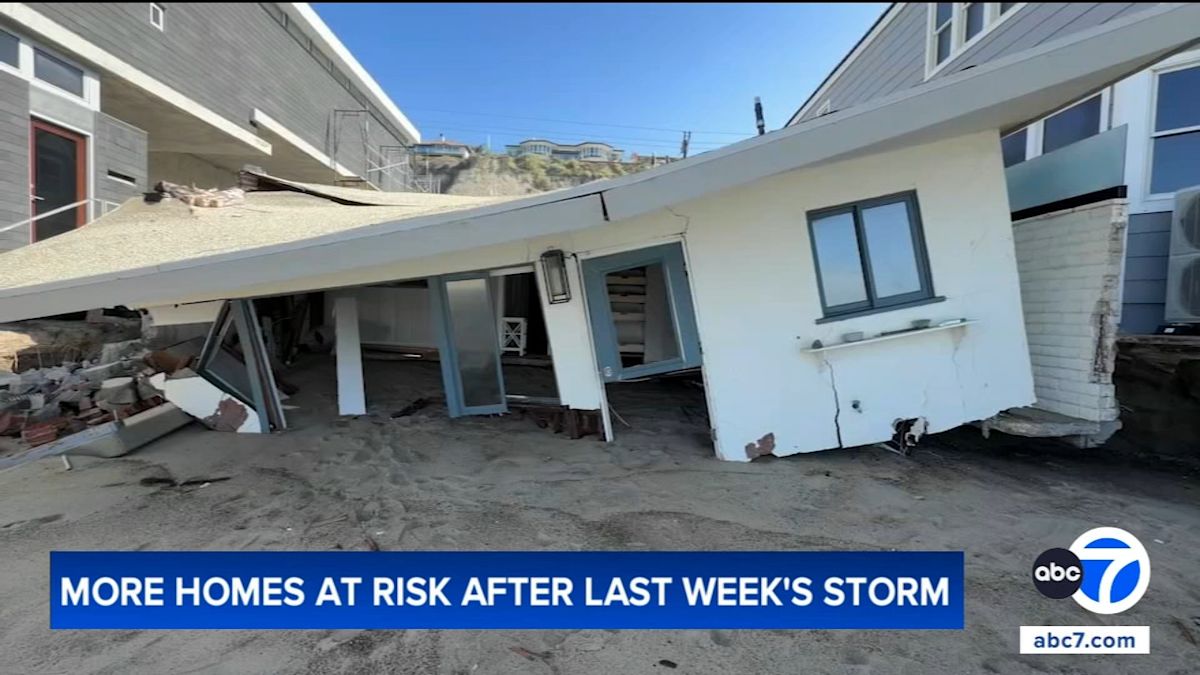
Severe ocean conditions and persistent coastal erosion have pushed multiple beachfront residences along Capistrano Beach to the brink of collapse, prompting municipal officials to declare a local state of emergency. Following powerful swells generated by Hurricane Marie, shoreline structures have suffered extensive structural compromises, forcing local building inspectors to deem ten homes entirely unsafe for human habitation. The escalating destruction has intensified frustration among waterfront property owners, who argue that bureaucratic hurdles and delayed interventions have left their properties vulnerable to the advancing Pacific tides.
Although the initial high-surf event linked to the hurricane has subsided, the destructive aftermath continues to unravel along the exposed coastline. The relentless wave energy eroded the foundational sandbanks beneath oceanfront properties, leading to the destabilization of several structures. Just a week after the severe weather passed, another residence began sinking into the surf, illustrating that the geological hazards facing the community remain an immediate and continuous threat rather than a temporary emergency.
Among those directly affected are Capistrano Beach homeowners Amy and Chris Rogers, whose property on Beach Road suffered devastating structural damage during the surge. The couple watched the churning ocean tear away their outdoor deck, leaving their kitchen precariously exposed to the open water and waves. The rapid loss of protective land beneath their home has created an urgent crisis, turning what was once a scenic shoreline residence into an unstable structure teetering above the incoming tides.
The Rogers family described the emotional toll of witnessing their neighborhood deteriorate so rapidly. Having experienced what they characterized as the seven stages of grief in only four days, the couple noted that early feelings of sadness and shock quickly transformed into profound frustration. In their view, much of the severe structural failure was avoidable had adequate coastal protections and comprehensive sand management strategies been implemented before the high-surf event battered the coastline.
A central point of contention for affected homeowners is what they describe as a complete lack of immediate, organized disaster support from public agencies. In the days following the initial wave damage, residents reported seeing no physical workforce, equipment, or financial aid deployed to help stabilize their vulnerable foundations. The absence of coordinated emergency response teams on the ground has left homeowners feeling isolated as they attempt to salvage what remains of their oceanfront properties.
In response to the deteriorating safety conditions along the coastline, the City of Dana Point officially declared a local emergency. Municipal safety evaluations determined that ten homes along Beach Road required red tags, signifying severe structural hazards that prohibit occupancy. Additionally, inspectors issued yellow tags to seven neighboring properties, alerting residents that those structures have sustained notable damage and carry restricted access until further safety assessments can be conducted.
The crisis has brought renewed attention to the chronic issue of coastal erosion and beach depletion throughout Southern California. Homeowners in Capistrano Beach have pointed out that natural sand buffers have rapidly vanished over recent years without sufficient beach nourishment initiatives to replace them. Without a wide sandy barrier to absorb incoming wave energy, powerful ocean swells strike residential foundations with unmitigated force, drastically accelerating erosion during major storm events.
Long-standing regulatory restrictions have further complicated efforts by homeowners to defend their properties against rising waters. Coastal management guidelines have historically limited the ability of private property owners to construct permanent defensive barriers. Residents contend that existing policies have tied their hands, preventing timely reinforcement work while sea levels and seasonal storms continue to eat away at the narrow strip of remaining beachfront.
To address the immediate danger, a spokesperson for the California Coastal Commission confirmed that the state regulatory agency has approved emergency permit applications covering 17 individual properties. These emergency authorizations grant homeowners temporary permission to implement shoreline armoring measures, including the placement of large boulders and rock revetments directly in front of endangered buildings to deflect crashing waves.
Despite these emergency approvals, beachfront residents have voiced sharp criticism regarding the conditions and costs tied to the permits. Homeowners must submit an emergency permit fee of $1,600 by mail for temporary defense measures that are authorized for only 120 days. Under the terms of the temporary permit, property owners are required to dismantle and remove all protective armoring once the four-month window expires, a requirement that residents describe as impractical and financially burdensome.
The California Coastal Commission maintains that extensive rock armoring and hard seawalls can worsen coastal erosion over time and diminish public beach access. The agency emphasizes that hardened structures can reflect wave energy outward, stripping surrounding sand and altering the natural coastline. While local homeowners acknowledge the validity of the state's environmental concerns regarding hard barriers, they maintain that emergency rock placement is currently their only immediate defense against total destruction.
Moving forward, Capistrano Beach residents are urging state and environmental officials to shift their focus toward sustainable, long-term coastal management solutions rather than relying exclusively on temporary restrictions. Community members emphasize that broad-scale beach nourishment projects, which replenish lost sand across the entire coastal zone, represent the most effective way to protect both private infrastructure and public recreation spaces from ongoing marine encroachment.
Political efforts are now underway to elevate the disaster to higher levels of government. A spokesperson for California Assemblywoman Laurie Davies announced that the lawmaker is actively pressing Governor Gavin Newsom to declare a formal State of Emergency across the entire coastal region. Such a gubernatorial proclamation would potentially unlock broader state resources, streamline regulatory procedures, and deliver coordinated emergency funding to assist impacted coastal municipalities.
For homeowners like Amy and Chris Rogers, the immediate future remains fraught with uncertainty. The couple is currently awaiting critical determinations from insurance adjusters to learn whether any portion of their damaged home can be salvaged through extensive structural remediation. If the foundational damage is deemed irreparable, they will be forced to demolish the remaining structure entirely and evaluate whether rebuilding along the rapidly eroding shoreline is even possible.





(0)