
A united coalition of civic leaders, law enforcement officials, and regional business representatives is intensifying pressure on California Governor Gavin Newsom to enact new legislative measures targeting rampant metal theft. The collective appeal follows widespread disruptions to critical infrastructure, where organized theft rings have repeatedly targeted utility networks, cutting essential communication links and plunging public roadways into darkness across Los Angeles and neighboring municipalities.
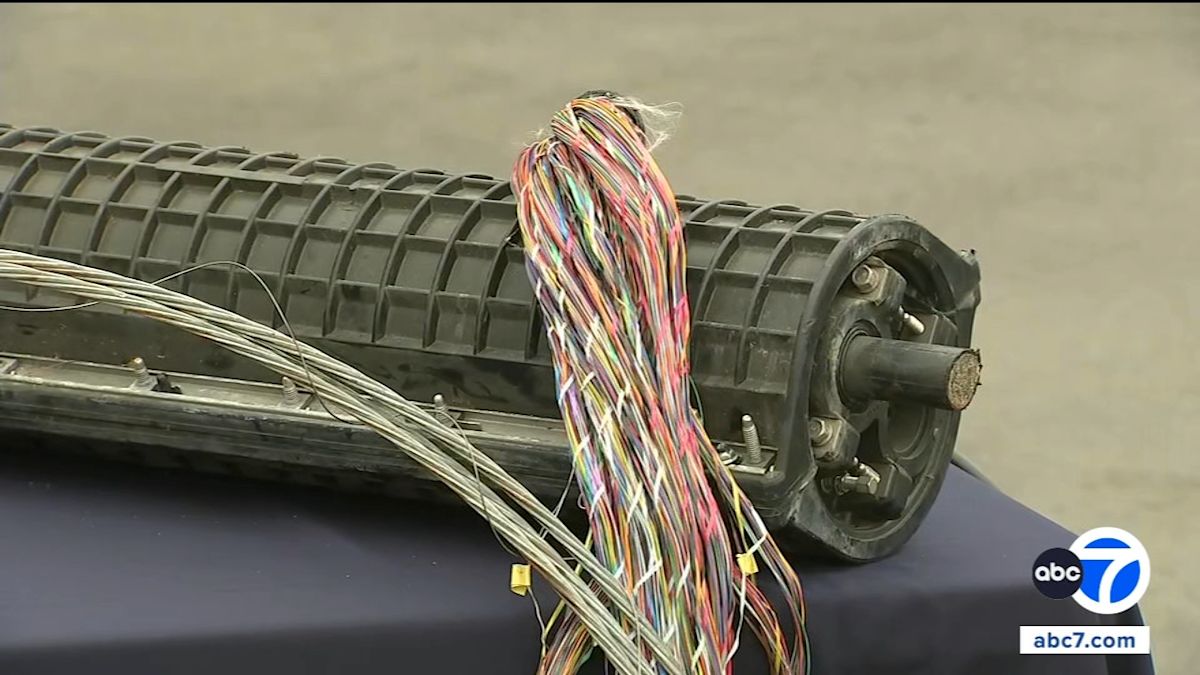
The urgency surrounding the legislative push has been brought into sharp focus by recently disclosed utility figures detailing the extraordinary volume of stolen materials. Public records requests submitted by 7 On Your Side Investigates revealed that more than 27,000 feet of communications cable was illegally stripped from the Los Angeles Department of Water and Power over the course of a single year.
To put the scale of the missing utility lines into perspective, the stolen material amounts to approximately five miles of continuous cabling. If oriented vertically toward the sky, the combined length of the pilfered wire would reach the standard cruising altitude of a commercial passenger jetliner. Laid out horizontally, the missing infrastructure spans a distance equivalent to 90 regulation football fields or roughly 165 Olympic-sized swimming pools placed end to end.
The systemic stripping of metal has generated severe fallout for local neighborhoods and urban corridors throughout California. Utility disruptions linked to the illicit operations have directly severed residential and commercial telephone services, while also leaving critical municipal streetlighting disabled. The resulting blackouts along major thoroughfares have elevated safety concerns for residents, pedestrians, and motorists across affected cities.
In response to the escalating crisis, state lawmakers have advanced Assembly Bill 1941, a targeted measure designed to equip law enforcement and judicial authorities with heightened statutory tools. The proposed legislation formally establishes a distinct criminal offense titled "organized metal theft," creating specialized legal mechanisms to dismantle the networks driving the illicit trade.
Under the provisions of AB 1941, individuals who collaborate to unlawfully extract, transport, or purchase stolen metals could face criminal penalties that include up to one year in jail. By penalizing both the individuals physically extracting the wiring and the illicit buyers who sustain the secondary market, proponents believe the law can disrupt the entire supply chain that fuels these operations.
The coalition gathered publicly on Monday to deliver their unified call to the governor, holding a press conference at the 6th Street Bridge in Los Angeles. The location served as a prominent real-world backdrop, representing one of the city's most visible and heavily targeted pieces of public infrastructure.
Assembly Member Mark González, a Los Angeles representative who authored and sponsored the bill, delivered an uncompromising message to organized thieves during the briefing. González emphasized that public assets must be safeguarded from criminal exploitation, stressing that the state cannot permit vital networks to be dismantled for private profit.
"California's infrastructure is not yours to steal," González stated during the press conference. He noted that the proposed law provides a critical opportunity to give prosecutors a far stronger tool to hold organized metal thieves accountable while shielding the essential systems that keep regional communities both secure and interconnected.
The symbolic setting of the 6th Street Bridge underscored the persistent, recurring nature of the problem. Metal scavengers have continually targeted the landmark structure, stripping away its interior electrical wiring and causing its architectural and functional lighting systems to go completely dark after sundown.
The financial toll of repairing the damage inflicted by metal scavengers has placed an immense burden on public funds. According to data highlighted by González, local taxpayers have already been forced to spend an estimated $11 million exclusively on replacing stolen cables and repairing damaged electrical components at the 6th Street Bridge alone.
The investigative findings by 7 On Your Side Investigates have highlighted how public utility departments like LADWP have become frequent targets for coordinated operations. The persistent removal of thousands of feet of line demonstrates that the illicit activity extends far beyond isolated acts of vandalism, operating instead as a coordinated underground enterprise.
Advocates representing commerce, municipal management, and police departments maintain that existing legal statutes have been insufficient to deter repeat offenders and commercial operators trafficking in stolen public wiring. They argue that establishing clear criminal penalties through AB 1941 is essential to curbing the financial and logistical chaos inflicted upon public utilities.
With the legislative process concluded in the state legislature, the fate of AB 1941 now rests entirely on Governor Gavin Newsom's desk. Supporters of the bill across Los Angeles and the broader state are awaiting the governor's final signature, viewing the statute as a necessary intervention to protect public resources, restore community lighting, and maintain regional communications infrastructure.





(0)