
A protracted legal battle over government transparency has uncovered a substantial volume of rider complaints and operational concerns regarding the private canine security contractor patrolling Chicago’s public transit network. The disclosures follow persistent efforts by a local attorney to compel the release of records that transit officials had withheld for nearly a year.
The Chicago Transit Authority, recognized as the second-largest public transportation system in the United States, has faced heightened scrutiny in recent years over commuter safety, public accountability, and rider confidence. Central to its platform security strategy is an $89.6 million taxpayer-funded contract with Action K9 Security, a private firm whose handlers and animals maintain a regular presence across the city's rail lines.
For more than a decade, private security guards wearing black uniforms and handling muzzled German Shepherds have been stationed on train platforms throughout the network. The canine teams are primarily deployed to deter disorderly conduct and address common transit infractions, such as fare evasion, smoking, and loitering. However, their presence has also sparked mounting unease among daily commuters regarding oversight, animal welfare, and handler conduct.
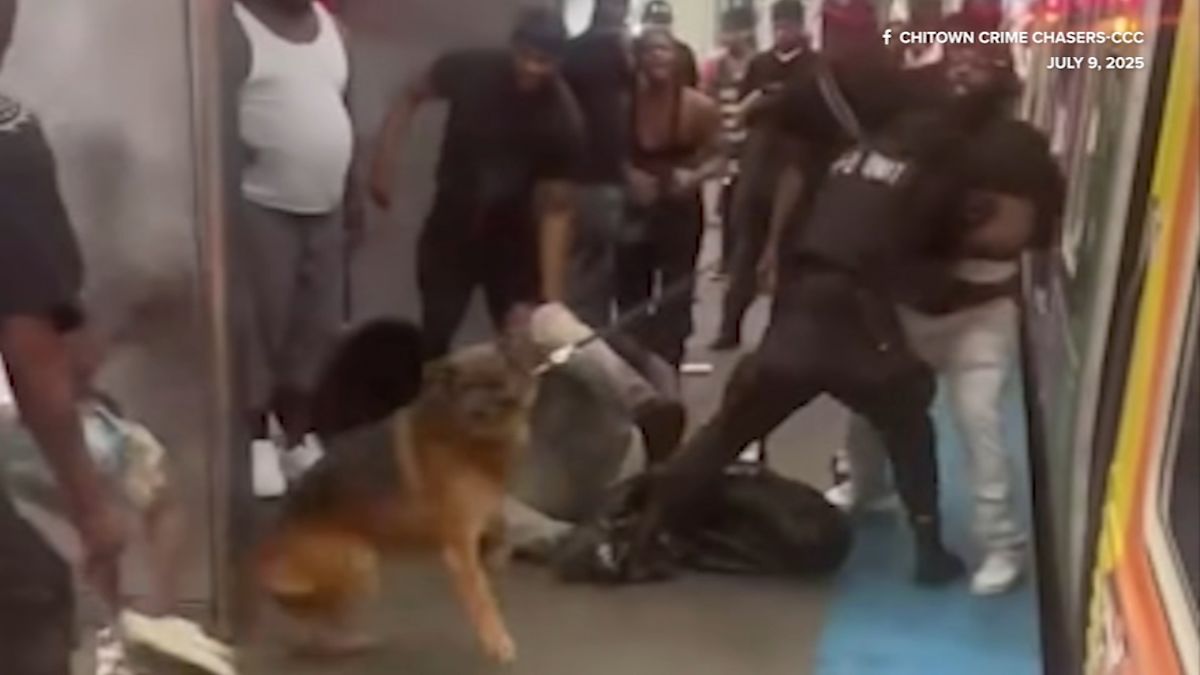
Public concern surrounding the private security units intensified following a violent altercation on July 9, 2025, at the Red Line's 69th Street station. During the incident, a chaotic brawl broke out between four men and canine handlers, resulting in punches and trash cans being thrown. A viral video recorded at the scene and shared across social media showed a security dog biting assailants and handlers without direction, while one handler fell onto the active train tracks.
The widely circulated footage generated a wave of public messages to transit officials, with riders demanding formal investigations and questioning the training and competence of both the handlers and the dogs under their control. Despite the public outcry, details regarding how the agency handled those grievances remained shielded from public view until legal action forced their release.
Chicago attorney Conley Wouters initiated the inquiry after witnessing conditions on the platforms that led him to suspect the animals were not being treated appropriately. Seeking to evaluate the contractor's performance and the transit agency's oversight, Wouters submitted requests under the Illinois Freedom of Information Act for the contract and all related complaint files.
When the CTA failed to provide the requested materials after several months, Wouters turned to the Illinois Attorney General's Public Access Counselor, a state entity tasked with reviewing improperly denied or ignored public records requests. Following an official review, the Public Access Counselor determined that the CTA was in violation of state law and instructed the agency to turn over the documents.
Despite the state’s formal determination, the transit agency produced only a portion of the files before communications stalled once again. Faced with continued administrative silence, Wouters filed a lawsuit against the transit authority in July of the following year to enforce compliance with state open-records statutes.
Nearly a full year after the initial request was filed, the agency finally surrendered the complete set of records. The disclosed documents revealed a total of 133 customer complaints filed between 2022 and the time of the release regarding the operations and conduct of Action K9 Security.
A significant portion of the grievances centered on the condition, temperament, and handling of the security dogs. Among the records was a formal concern lodged by one of the transit authority's own senior attorneys, who noted an on-duty canine team with an animal that appeared unfit for service, observing that the muzzled dog was aggressively lunging, barking, and growling at passing commuters.
In addition to complaints regarding canine behavior and welfare, the released files revealed numerous reports detailing inappropriate conduct by human guards. Passengers reported instances of security personnel neglecting their assigned monitoring duties on platforms, as well as inappropriate behavior toward the public, including allegations of guards catcalling female riders.
The records also provided insight into the administrative handling of the July 2025 Red Line brawl. According to the internal documentation, customer complaints submitted in the wake of the violent platform fight were marked as closed within approximately 24 hours, with no accompanying documentation showing that a formal or thorough inquiry had been conducted.
Both the transit authority and Action K9 Security declined requests for on-camera interviews regarding the findings and the legal dispute. In a written response, a spokesperson for Action K9 Security stated that certain complaints had likely been mistakenly attributed to its personnel instead of other security vendors operating in the transit system, maintaining that allegations connected to the company were found to be unsubstantiated after internal review.
The transit agency asserted in a statement that it immediately investigates all customer complaints submitted through its reporting channels. Nevertheless, the protracted fight for basic operational records has raised broader questions about oversight and transparency within a multi-million-dollar private security apparatus tasked with safeguarding millions of daily passengers.





(0)