
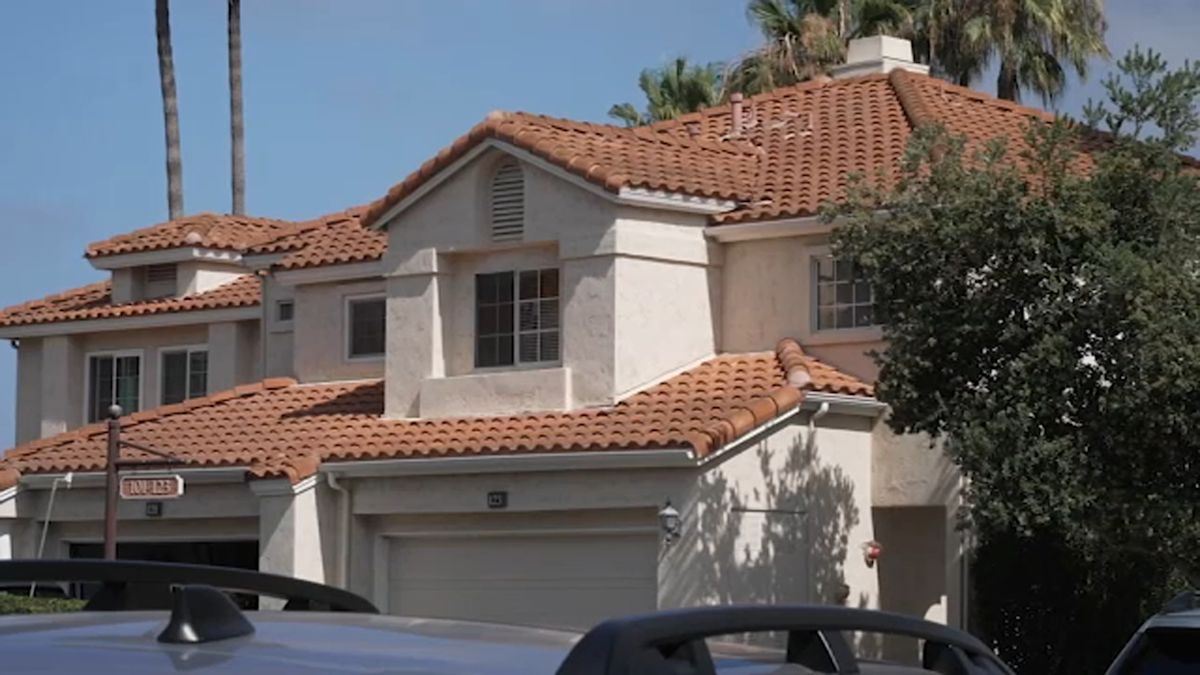
In a surprising turn of events, homeowners at the Villa Moura condominium complex in San Clemente, California, are grappling with a $26,000 emergency assessment for roof replacements. The sudden financial burden has left many residents questioning the legality of the assessment and the homeowner's association (HOA) board's decision-making process.
The assessment, which was imposed on all 198 units in the complex, has sparked a heated debate among residents. Beverly Albright, an 81-year-old resident, expressed her concerns, stating, "I will have to move. And this was my... I've worked very hard to make it so that I could be here."
Many residents argue that the assessment is excessive and unnecessary. Megan Blanda, a homeowner, commented, "They're not going to be able to afford this, and the board's response is to take out a loan, or take out equity of your house, or dip into your retirement, and I feel like that's just unacceptable."
The homeowners are taking a stand against the assessment by seeking to recall members of the HOA board and by filing a claim alleging the board violated the law. Noah Martin, a homeowner, argued that the project does not qualify as an emergency under state regulations and said residents should have been allowed to vote on how to address the roofing work.
"The project does not fit under the California Code of Regulations, 5610. Clearly, it was not an emergency; it's a deferred maintenance. And so, then we as members should have a vote on how we want to take care of the roofs," Martin said.
Furthermore, residents have been warned that liens could be placed on properties if owners do not pay the assessment. "They're threatening, also, to put a lien on our property if we don't comply and we don't pay," a resident said during a gathering of homeowners.
Despite the board's knowledge of the need for repairs to the tile roofs for several years, residents contend that the roofs are not leaking and that only the underlayment needs replacement, not all of the tiles. Adam Dubin, a homeowner, called for competitive bidding and negotiation of bids in the best interest of the homeowners. "What we would like to do is have multiple bids competitively submitted and actually negotiate those bids in the best interest of the homeowners. As the board should be doing with their fiduciary responsibilities to us," Dubin said.
Michael Kushner, an attorney and HOA expert with MBK Chapman who is not involved in the dispute, explained that large special assessments have become more common and that homeowners generally must pay assessments even while challenging them. "Homeowners have to pay those, even if they're completely illegal. They have to pay them and then dispute them. California law doesn't recognize the right of offsets, and you can't withhold payment," Kushner said.
The financial impact of the assessment has left some residents uncertain about how they will cover the cost. "Retired, single, what, lose my house? I wouldn't qualify for a loan to refinance. So where do you go?" Albright questioned.
The HOA board said it could not comment on the matter due to ongoing legal issues. Residents are considering filing a lawsuit against the board and are advised to consider loss assessment coverage as part of their insurance policies, which can help cover emergency HOA assessments.









(0)