
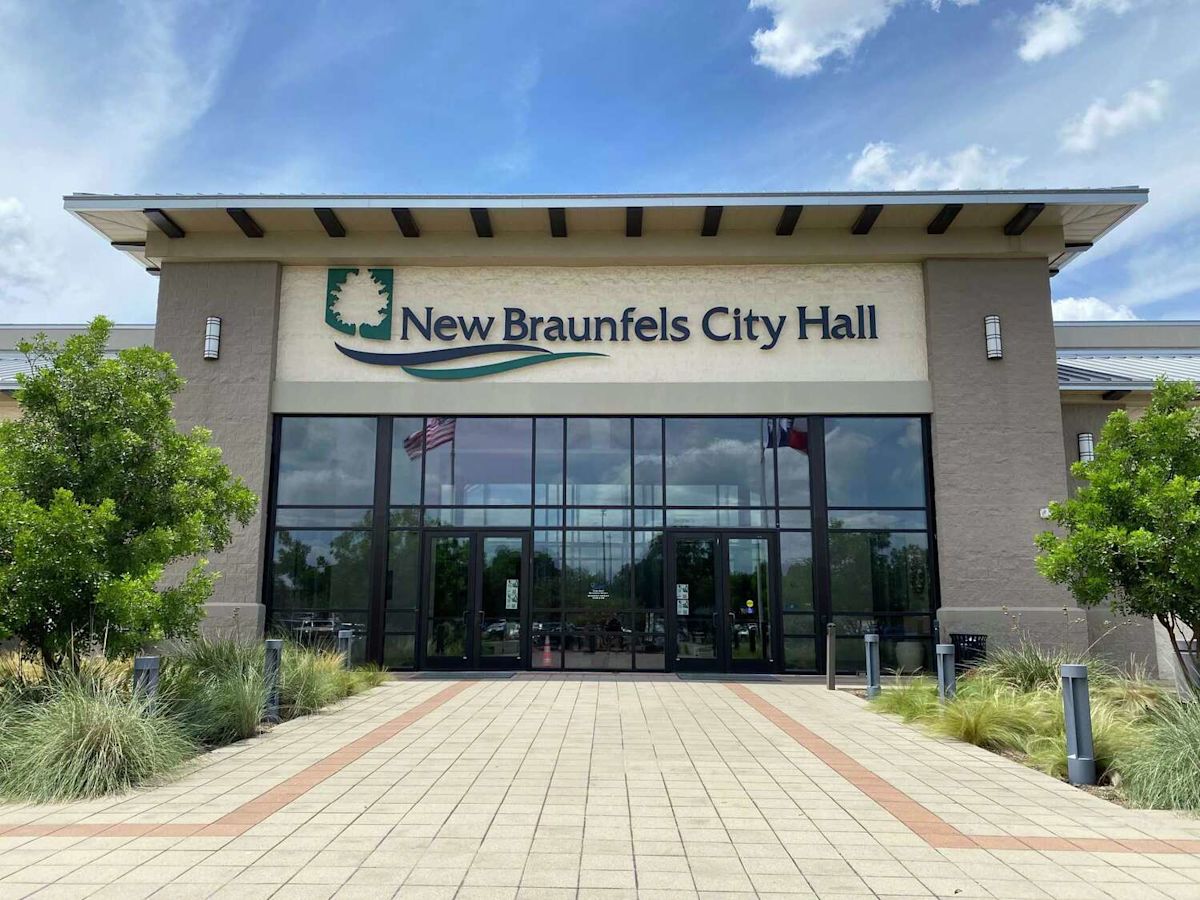
The New Braunfels City Council has voted against granting a substantial utility fee waiver for a planned affordable housing complex, though local leaders emphasized their ongoing commitment to seeing the development completed. During a recent municipal meeting, officials directed city staff to investigate alternative financial mechanisms that could help close the developer’s budget shortfall without placing the burden on the city’s municipal utility system.
The project under review, known as the Park at Dogwood, is a proposed 76-unit apartment community situated at 1869 McQueeney Road. Developed by The Park Companies, the residential initiative is currently confronting an estimated $2 million financial deficit, according to Jeff Jewell, the economic and community development director for New Braunfels.
To mitigate that budgetary shortfall, the development team sought relief by asking the city council and New Braunfels Utilities to waive up to $500,000 in utility impact fees. These fees are routinely assessed on new real estate construction to assist the municipality in covering the infrastructure costs tied to expanding water, sewer, and electric capacity. With total utility impact assessments for the complex reaching roughly $1.3 million, the requested concession would have represented a reduction of nearly 40 percent.
Because New Braunfels Utilities operates as a city-owned entity providing essential electric, water, and wastewater services, its institutional fee waiver procedures require an official recommendation from the city council before any discount can be approved by the utility’s governing board.
The council decided by a unanimous 5-0 vote to advise the New Braunfels Utilities board against granting the requested waiver. However, the motion included explicit instructions for city administrative staff to explore other potential avenues to assist the project and bridge the existing funding gap. Both Mayor Michael French and Councilwoman Toni Carter were absent from the dais during the vote.
The overall price tag for the Park at Dogwood development is estimated at approximately $22.3 million. The venture relies heavily on the federal Low-Income Housing Tax Credit program, which granted an allocation to the project in 2024. These federal tax incentives were originally projected to yield around $17.6 million in equity for the build.
However, the development timeline faced unexpected disruptions when the Federal Emergency Management Agency introduced revised floodplain designations across the local area. This regulatory shift necessitated extensive architectural redesigns and generated construction delays, which ultimately eroded the anticipated tax credit revenue down to $15.7 million, precipitating the current multi-million-dollar gap.
Once constructed, the complex is designed to offer below-market rents to lower-income households. The residential units will cater to families earning between 30 percent and 60 percent of the area median income, translating to annual earnings between roughly $21,000 and $54,000 depending on family size. Rental rates for the units are projected to range from $424 to $1,196 per month, determined by household income levels and apartment layouts.
In addition to exploring utility relief, municipal records indicate that the city has evaluated the possibility of waiving approximately $250,000 in roadway impact fees. Furthermore, the developer has pursued a collaborative arrangement with the New Braunfels Housing Authority that would provide a property tax exemption on the real estate, offering another strategy to trim the project's financial deficit.
Despite expressing general enthusiasm for expanding affordable housing options in New Braunfels, council members voiced strong reservations about using utility funds as a financing vehicle. Councilwoman Nikki Shaw noted that New Braunfels Utilities has systematically enacted rate increases each year since 2023 to finance vital public infrastructure, making an impact fee waiver for private development difficult to justify to regular customers.
Shaw suggested that financial assistance should instead come from entities designed specifically to stimulate economic investment, such as the New Braunfels Economic Development Corporation, which oversees dedicated local sales tax revenues. She underscored that municipal growth requires real infrastructure investment that must be accounted for, emphasizing that forgiving fee obligations simply shifts the financial burden elsewhere.
The public comment portion of the meeting highlighted community division over the proposed complex. Resident Eva Pepitone voiced opposition to the development, asserting that the complex would strain the surrounding neighborhood and school system, arguing that a concentration of single-parent families who work late would leave children without sufficient after-school guidance for homework.
Elected officials firmly pushed back against those characterizations of prospective tenants. Councilman Michael Capizzi voiced strong disagreement with negative assumptions about low-income residents, stating that New Braunfels represents a community that provides a helping hand to those in need. While Capizzi supported Councilwoman Shaw’s stance against using utility waivers, he maintained that the city must support the underlying project through more appropriate avenues.
Councilman D. Lee Edwards shared his own past economic hardships while delivering a defense of affordable housing initiatives. Reflecting on a period in 1977 when his circumstances forced him to relocate his family into a modest single-wide mobile home in South Carolina for $125 a month with a newborn infant, Edwards described affordable housing as an essential stepping stone that gives working families the opportunity to overcome hardship.
Other participating residents echoed the council's perspective regarding utility management, voicing general support for workforce housing but maintaining that impact fees should remain intact to protect ratepayers from subsidizing infrastructure connections. With the council's directive in place, city staff will now focus on identifying alternative funding streams to help the project move forward.





(0)