
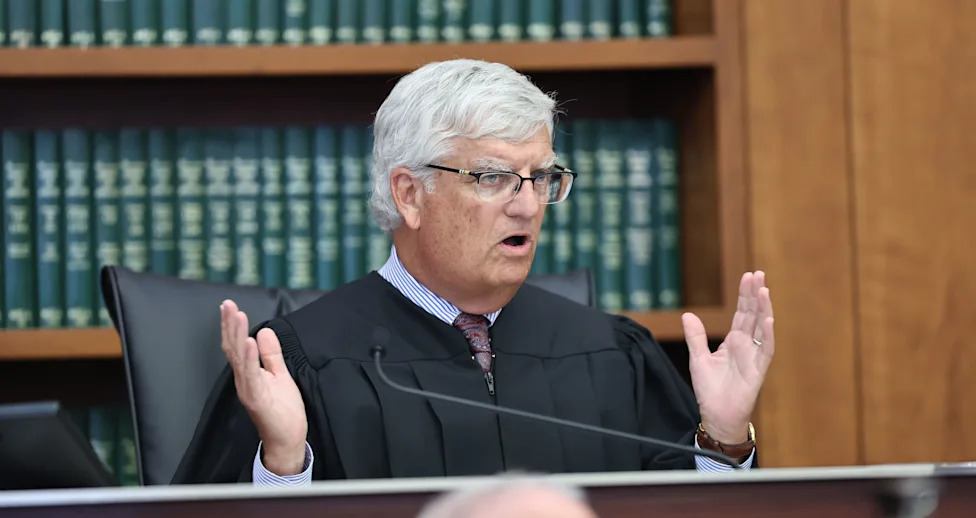
A Massachusetts judge has issued an indefinite extension on an order that conceals the identities of the jurors who served during the murder trial of Lindsay Clancy. Plymouth Superior Court Judge William Sullivan ruled to keep the panel's names sealed from the public, pointing directly to heightened concerns regarding personal safety and the relentless attention directed at the case.
The formal decision, issued in a written order dated September 14, 2026, emphasizes that the emotionally charged trial has generated pervasive and polarizing discourse across Massachusetts and throughout the country. Judge Sullivan highlighted that the courtroom proceedings were fully livestreamed to the public, transforming the legal battle into a subject of constant scrutiny and daily debate across digital platforms.
Under standard judicial practice, the identities of individuals selected for jury service are typically categorized as public records once proceedings conclude. However, Judge Sullivan determined that extraordinary circumstances justified a departure from routine transparency, ruling that good cause was firmly established to keep the panel's personal information permanently impounded.
In his ruling, the judge underscored that exposing the identities of the deliberating members and alternates could lead to immediate and irreparable injury. Sullivan noted that the threats surrounding the panel remain a real and present danger, both to the physical and emotional well-being of the participants and to the broader integrity of the jury system.
The protective order comes on the heels of a dramatic conclusion to the trial on Friday, September 4, 2026, when Judge Sullivan was forced to declare a mistrial. Deliberations had ground to a complete halt after the panel notified the bench that they were hopelessly deadlocked and incapable of reaching a unanimous verdict on the charges against Clancy.
Throughout the course of the trial and in its immediate aftermath, security issues emerged around the Plymouth courthouse. The judge referenced specific incidents that compromised juror privacy, most notably the arrest of an individual who was caught secretly recording video footage of jurors as they exited the building during the trial.
Beyond physical encounters at the courthouse, jurors faced severe digital exposure and online harassment. Court documents revealed that personal information belonging to panel members had been unlawfully tracked down and circulated across various digital platforms without their consent, subjecting them to intense public scrutiny, online harassment, and doxing.
The court also disclosed that the move to extend the impoundment indefinitely was prompted in part by direct appeals from the jury box. At least one serving juror formally petitioned the court to maintain confidentiality on an open-ended basis to protect their personal privacy and security from outside interference.
While a small number of jurors have chosen to speak publicly on their own terms regarding their time in the deliberation room, the vast majority of both deliberating and alternate members have firmly declined media inquiries. Most have sought to maintain strict anonymity as the public reaction to the deadlocked verdict continues to unfold.
Judge Sullivan clarified that the court's impoundment order applies strictly to institutional releases of court records and does not silence the jurors themselves. Individual panel members retain the constitutional freedom to come forward, reveal their names, or discuss their courtroom experiences publicly should they choose to do so voluntarily.
The underlying criminal case centers on Clancy, a Duxbury mother accused of killing her three young children inside the family's home in January 2023. The tragedy shocked the local community and quickly evolved into an intensely watched legal saga, raising complex legal arguments that divided observers and legal analysts alike.
With the initial trial ending without a resolution, the legal battle over Clancy's culpability remains active. The defense has sought an acquittal following the mistrial, arguing that the evidence presented by the Commonwealth during the trial was legally insufficient to sustain a conviction.
At the same time, prosecutors and defense counsel are continuing to litigate the procedural path forward to determine whether a retrial will take place. Clancy is scheduled to appear before the court again later this month as the legal teams confront the next phase of the high-stakes proceedings.
The decision to seal the juror rolls indefinitely reflects the growing challenge trial courts face in safeguarding citizen jurors in the era of live digital broadcasts and viral social media commentary. By keeping the protective order in place until further notice, the court aims to shield community members from further harassment as the legal aftermath of the case continues.








(0)