
A lucrative cottage industry has emerged around the federal clemency process, with well-connected political operatives offering to secure presidential pardons for exorbitant fees by circumventing traditional institutional pathways. The rise of this informal market reflects a fundamental shift in how executive mercy is sought and granted, transforming a process historically rooted in formal legal review into a high-stakes arena driven by personal access, political pressure, and substantial financial transactions.
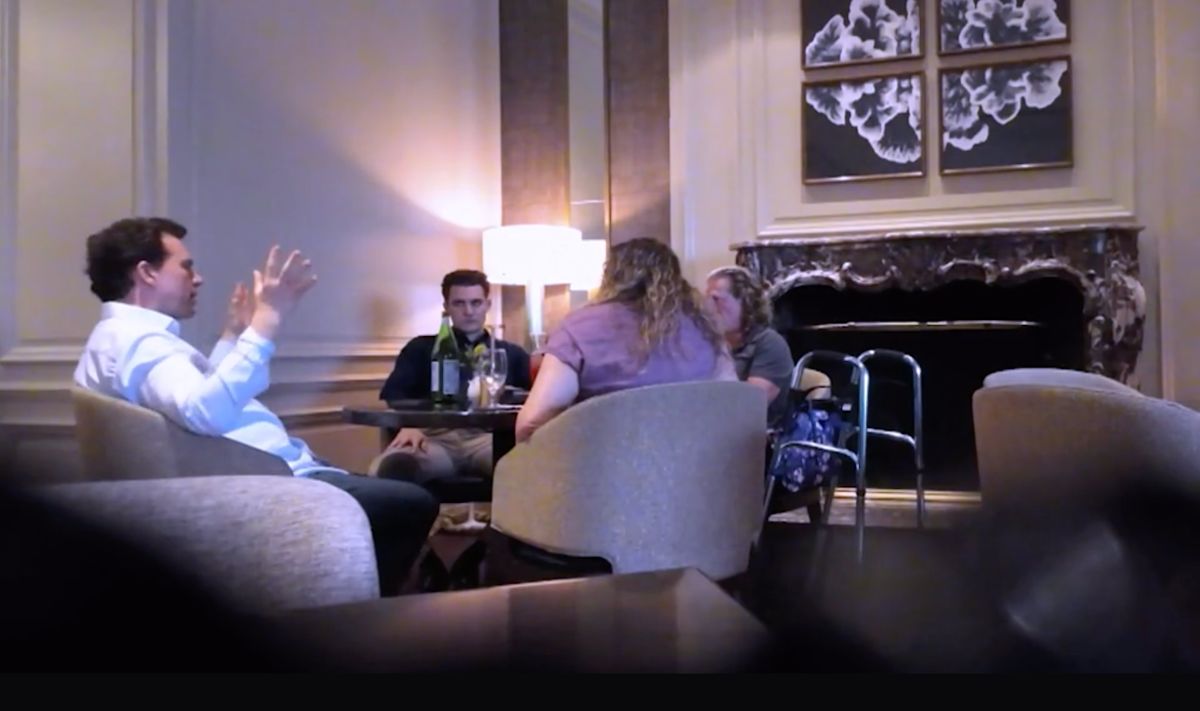
The mechanics of this burgeoning trade were laid bare during a mid-August encounter at a hotel bar inside the Ritz-Carlton in Tysons Corner, Virginia. There, lobbyists and conservative commentators Jack Burkman and Jacob Wohl met with a convicted felon named Ammon Covino and his wife, Crystal, to pitch their specialized clemency brokerage services.
During the meeting, Burkman detailed their unconventional methodology, explaining that securing relief from the current administration requires mounting continuous and multifaceted pressure directly on the president. Rather than relying on traditional administrative channels, the brokers emphasized that success hinges on strategic momentum and insider relationships to compel executive action.
To execute their plan, Burkman and Wohl proposed a price tag of $300,000. In exchange, they projected that they could deliver a presidential pardon in a matter of months, targeting October for the resolution of the case. Unbeknownst to the lobbyists, however, the prospective client was participating in an undercover investigation conducted by CBS News’ "60 Minutes," with hidden cameras documenting the entire transaction.
Covino, the subject of the pitch, had previously operated aquariums and served nearly two years in federal prison following a conviction for illegally moving a shark and a stingray across state lines. Seeking to clear his criminal record, he had initially taken the standard bureaucratic route by mailing a formal clemency petition to the Justice Department during the Biden administration.
That petition was officially rejected in July by President Trump as part of a sweeping initiative to eliminate a massive backlog of pending clemency files. Having exhausted standard channels, Covino served as an ideal figure to test the claims of independent brokers who market alternative avenues to executive relief.
The emergence of these private intermediaries coincides with a significant departure from historical clemency practices over the past 18 months. Upon taking office for a second term, the president immediately granted clemency—through pardons, commutations, and dismissed prosecutions—to more than 1,500 individuals facing charges or convictions connected to the January 6, 2021, Capitol riot. This mass action was subsequently followed by dozens of individual pardons granted to wealthy and politically connected white-collar offenders.
Executive clemency has frequently sparked public controversy throughout modern American history. Previous administrations have faced intense scrutiny for high-profile pardons, including Gerald Ford’s pardon of Richard Nixon, Jimmy Carter’s amnesty for Vietnam War draft evaders, and Bill Clinton’s final-day grant to Marc Rich, whose former spouse was a prominent donor. More recently, in December 2024, Joe Biden drew sharp criticism for granting late-stage pardons to political allies, donors, Anthony Fauci, and his son Hunter Biden following federal gun and tax convictions.
Despite this long history of controversial pardons, veteran defense lawyers, federal prosecutors, and legal scholars emphasize that the current environment represents an unprecedented commercialization of executive power. The clemency landscape has increasingly evolved into an unconstrained marketplace dominated by political influencers and intermediaries trading on perceived proximity to executive decision-makers.
Traditionally, clemency requests were routed through a rigorous evaluation conducted by more than two dozen specialized attorneys within the Department of Justice. These career officials routinely assessed an applicant's demonstration of personal rehabilitation, remorse, and behavioral record before presenting formal recommendations to the White House.
In the current administration, that structured bureaucratic assessment has been largely bypassed. According to an analysis of Department of Justice records, approximately 70 percent of clemency actions granted during the president's second term avoided the formal Justice Department review process entirely, a figure that surges to 92 percent when accounting for the mass January 6 clemency grants.
In place of formal administrative scrutiny, private brokers rely on alternative levers of influence, deploying aligned social media figures, personal connections, and associates close to the president. Because direct access represents the primary commodity in this environment, intermediaries frequently charge prospective applicants fees ranging from several hundred thousand dollars to as much as $3 million.
Legal scholars have raised profound concerns regarding the ethical implications of this privatized access system. Mark Osler, a law professor at the University of Saint Thomas in Minnesota who directs a pro bono clemency clinic for federal offenders, noted that a constitutional relief mechanism designed to be universally accessible and free of financial burden has been transformed into a commercial enterprise.
Osler observed that clemency applicants are increasingly driven to believe that their only viable path to relief requires hiring high-priced intermediaries capable of reaching the president at private venues like Mar-a-Lago or paying substantial sums to associates of administration officials.
As traditional legal protocols remain sidelined in favor of personal lobbying campaigns, the clemency system has increasingly evolved into a dual-track framework. For those with significant financial resources and the ability to hire influential intermediaries, executive mercy has become a negotiable outcome, while ordinary applicants navigating standard institutional channels face diminished prospects of consideration.





(0)