
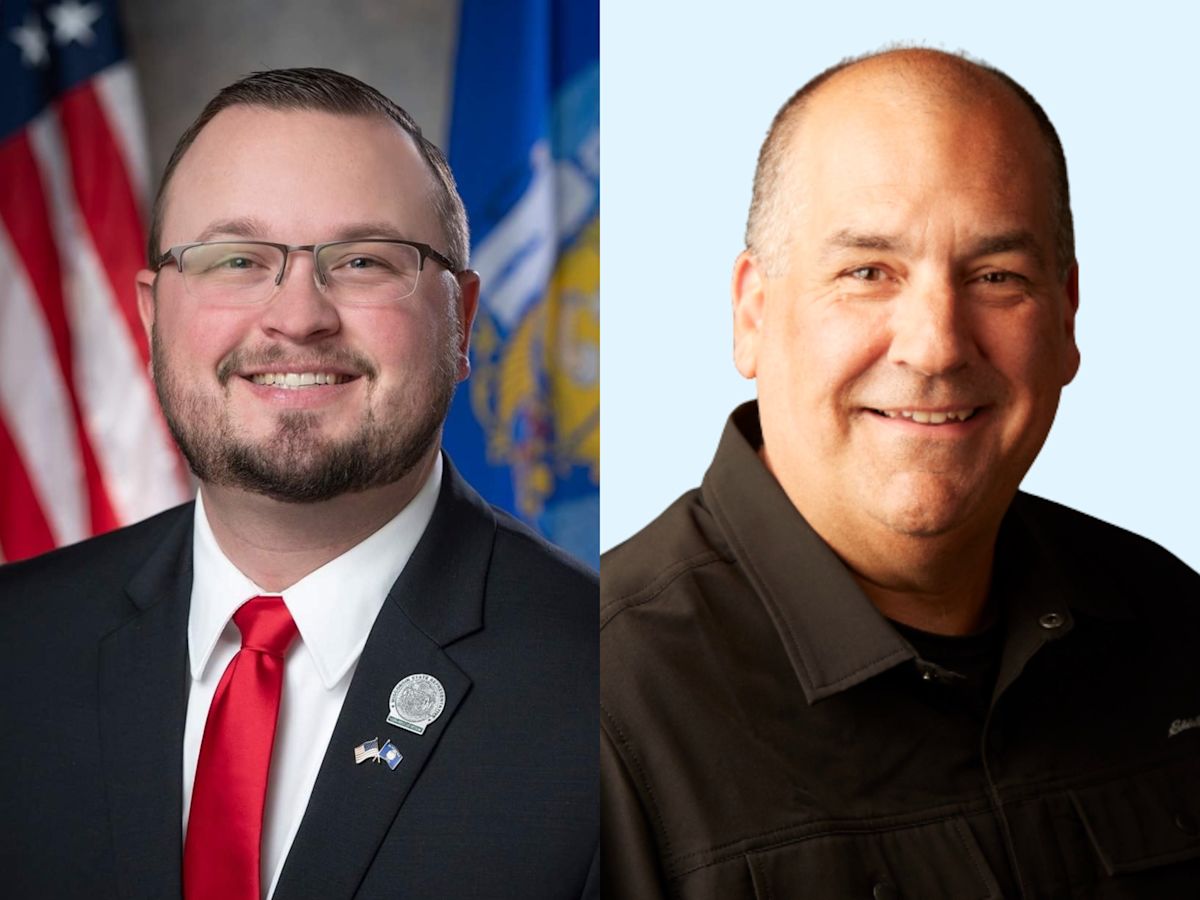
Voters across central Wisconsin are preparing to head to the polls on November 3 to decide who will represent Assembly District 39 in the state Capitol. The legislative race features Republican incumbent Alex Dallman, who is seeking reelection, and Democratic challenger Michael Skivington. The outcome will determine legislative representation for a wide geographic swath of rural and small-town communities spanning multiple counties.
Assembly District 39 encompasses western Fond du Lac County, including the city of Ripon, the villages of Rosendale, Brandon, and Fairwater, as well as the towns of Ripon, Rosendale, Eldorado, Metomen, Springvale, Lamartine, and Alto. The district's boundaries also stretch across the entirety of Green Lake and Marquette counties, while incorporating portions of Winnebago, Adams, and Columbia counties.
Representing the Republican ticket is 34-year-old Alex Dallman, a Markesan resident who currently serves as the district's full-time state legislator. Dallman first earned his seat in the Wisconsin State Assembly in the 2020 general election and has since served as a legislative voice for the region. Prior to his election, Dallman completed his undergraduate education at Edgewood University, where he earned a bachelor's degree in 2015.
Throughout his political career, Dallman has maintained ties to several local and regional organizations. He previously served as the chairman of the Green Lake County Republican Party and holds memberships with the Green Lake County Farm Bureau, the Berlin Conservation Club, and the National Rifle Association. In his hometown community, Dallman is an active member of St. John's Lutheran Church in Markesan. Public records and candidate disclosures show no history of criminal charges or conflicts of interest.
Dallman frames his reelection campaign around his established record of legislative service in Madison and his identity as a rural advocate. He highlights his efforts to deliver results across Fond du Lac, Green Lake, and Marquette counties, emphasizing that rural communities need a strong voice to counter excessive state spending and bureaucratic growth. Dallman's platform places significant emphasis on preserving key regional economic drivers, specifically the agriculture and tourism industries that sustain central Wisconsin.
In outlining his legislative objectives, Dallman points to a conservative policy foundation centered on advancing tax relief, shrinking government oversight, safeguarding Second Amendment protections, defending pro-life values, and maintaining election integrity. He also underscores the importance of expanding access to career and technical education programs to support local workforce development, while pointing to past achievements such as state tax reductions and community infrastructure investments.
If reelected, Dallman has outlined key policy priorities aimed at improving economic conditions and reforming public services. His foremost goal is to enhance community affordability by pursuing regulatory reductions, lowering taxes, and creating a more competitive statewide business environment to foster commercial opportunities. In addition, Dallman seeks to tackle what he identifies as a property tax crisis by overhauling Wisconsin's education funding formula to relieve the financial strain placed on residential taxpayers.
Challenging Dallman for the seat is 57-year-old Democrat Michael Skivington, an independent real estate professional residing in the Town of Green Lake. Skivington enters the race with background experience in local municipal governance, having served two terms as an elected board supervisor for Green Lake County. Skivington's background bridges both public service and private business in the local community.
Skivington brings an extensive background in education to his legislative bid. He earned a bachelor’s degree in sociology from the University of Wisconsin-Oshkosh in 1997, followed by a master’s degree in education from the same institution in 2002. Skivington later obtained a Ph.D. in education from the University of Wisconsin-Madison in 2006. His professional career includes years working as a high school instructor for grades nine through twelve, as well as serving as a college professor.
Beyond his professional work, Skivington possesses bilingual language skills in Spanish and English and has spent time living and studying in multiple foreign countries. Locally, he has been an active congregant of the Federated Church of Green Lake for over a quarter of a century, serving on its Diaconite Board, volunteering as a church usher, and participating in community events. Candidate disclosures confirm that Skivington has no criminal convictions, pending legal charges, or business conflicts of interest.
Family is also a central element of Skivington's community life. He has been married for 36 years to his wife, Carol, who is also his business partner in real estate. The couple has two adult children: Claire, a 27-year-old attorney and UW Law graduate who co-founded and coaches the Dogs Basketball AAU travel team alongside her husband Derrick, and Spencer, a 24-year-old UW-Oshkosh graduate who works as a public school teacher.
Skivington's motivation for entering the legislative contest centers on reinforcing democratic engagement and competitive elections. He argues that robust political competition is vital to the health of representative democracy, asserting that having active challengers compels candidates to sharpen their ideas and ensures that elected officials remain directly accountable and responsive to the constituents they are chosen to represent.
Both candidates have established official campaign operations to reach voters ahead of the November election. Dallman operates his campaign through his website, alexdallman.com, and campaign email. Skivington maintains an online presence via skivington4wi.com, email, direct phone communications, and active social media accounts on Facebook and Instagram under the handle @ilikemike4wi.
As the November 3 general election approaches, voters across Assembly District 39 will weigh the differing backgrounds and priorities of the two contenders. The contest presents residents with a definitive choice between an incumbent Republican emphasizing tax cuts, rural economic defense, and school funding reform, and a Democratic challenger stressing the necessity of electoral competition, educational insight, and local government experience.


(0)