
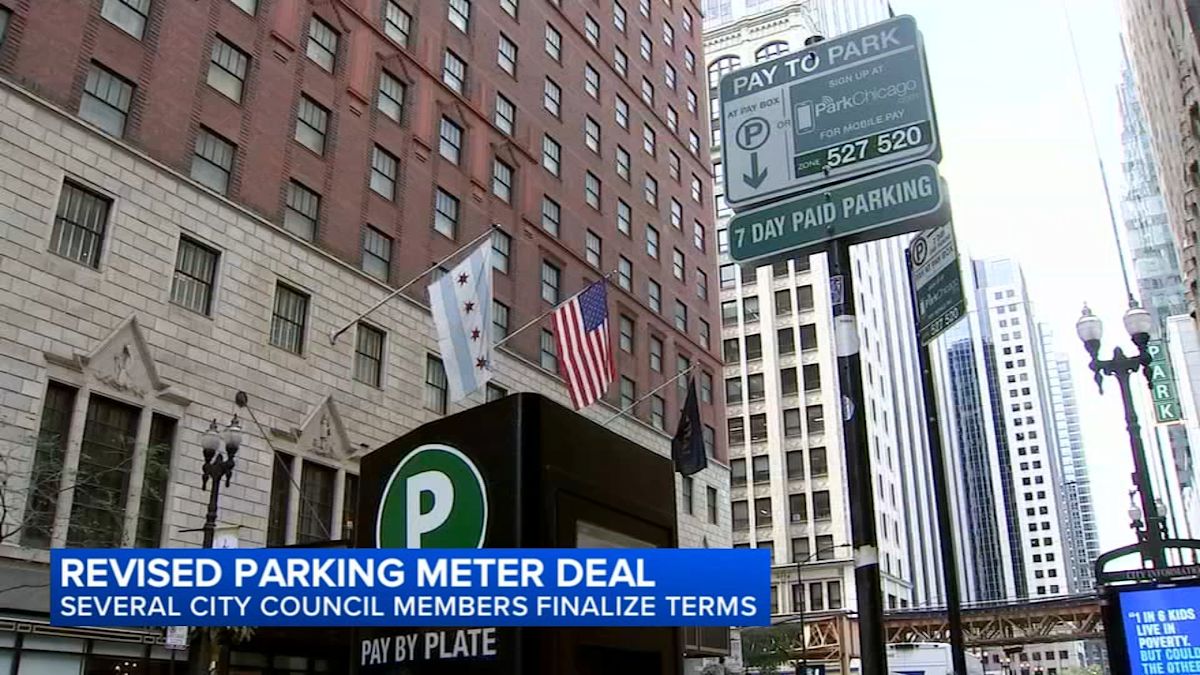
Chicago alderpersons have negotiated a new agreement governing the operation of the city's privatized parking meter system, securing an influx of upfront cash and long-term revenue sharing under a proposed ownership transfer to New York-based investment firm Stonepeak Partners.
Under the framework of the proposed transaction, the city is slated to receive a one-time transfer fee of $75 million upon the closing of the sale. In addition to the immediate payout, the revised terms grant Chicago a five percent share of annual net operating income generated by the meter network for the remaining duration of the existing lease.
Financial projections indicate that this five percent profit-sharing arrangement could deliver more than $376 million to municipal coffers over the life of the agreement. City leaders have structured the pact so that all proceeds realized from both the initial transfer fee and ongoing annual revenues will be channeled directly toward Chicago's pension obligations.
The pending transfer represents an effort by local lawmakers to rebalance the terms of the city's widely criticized 2008 privatization agreement. Under that original contract, municipal leaders leased the public parking meter system to Chicago Parking Meters LLC for a term of 75 years, establishing an arrangement that has remained a prolonged source of political frustration and fiscal regret.
The enduring dissatisfaction with the 2008 pact was highlighted by 27th Ward Ald. Walter "Red" Burnett, who openly characterized the original privatization as the most toxic deal in the history of Chicago. For motorists and residents, the consequences of the long-term lease have been acutely felt on the streets, particularly in downtown commercial districts such as the Loop, where hourly parking meter rates have more than doubled since 2008.
Negotiated over a period of several months, the new transaction was crafted through direct collaboration between key City Council members and the city’s law department. Council leadership intentionally spearheaded the talks to establish a clear and public process following past administrative setbacks.
Supporters of the plan highlighted that Mayor Brandon Johnson was not involved in the latest round of discussions. The decision to keep the negotiations council-led followed an unsuccessful bid by the mayor during the prior year to repurchase the parking meter infrastructure outright, an effort that had sparked scrutiny and transparency concerns among lawmakers.
Finance Committee Chair and 3rd Ward Ald. Pat Dowell stated that council members stepped forward to take control of the matter after the administration passed the issue along. Dowell noted that lawmakers embraced the responsibility to construct a viable package and expressed hope that the mayor would actively support the outcome and assist in securing the necessary legislative votes for passage.
Mayor Johnson has stopped short of providing an explicit public endorsement of the terms, though he recognized the council's efforts. The mayor commented that he is grateful and hopeful regarding the work undertaken to assemble a package that offers a better deal for taxpayers, adding that he hopes the City Council finds a way to deliver for the residents of Chicago.
Beyond financial considerations, the negotiations addressed significant social and ethical issues tied to the prospective buyer. Lawmakers had previously registered intense opposition to Stonepeak due to the investment firm's ownership of Omni Air International, an aviation charter company that was utilized by the Trump administration to conduct deportation flights for U.S. Immigration and Customs Enforcement.
To resolve these concerns and facilitate the transaction, Stonepeak agreed to divest and sell Omni Air International. The divestment removed a substantial sticking point that had previously stalled legislative movement and triggered vocal pushback during earlier committee reviews.
Commenting on the divestment, 22nd Ward Ald. Mike Rodriguez stated that the sale of the aviation carrier represents a step in the right direction, putting the proposal in a far better position than in previous iterations. Rodriguez noted that he intends to consult with his constituents to gauge community sentiment before determining how he will cast his vote.
Other council members have framed the revised arrangement as a practical victory given the binding constraints of the multi-decade 2008 lease. While acknowledging that the proposal cannot erase the financial realities of the past two decades, 32nd Ward Ald. Scott Waguespack described the package as a solid agreement that establishes a favorable framework for the coming decades.
Proponents have also stressed that approving the transfer is vital to protecting the city from severe financial liabilities. Dowell warned that rejecting the agreement or failing to finalize the transaction before the end of the month could trigger formal arbitration or extensive litigation, which she cautioned could expose Chicago to potential legal costs reaching into billions of dollars.
Public response to the proposed transaction remains mixed among local residents who have experienced years of elevated parking charges. Sachin Bhalerao, a resident of downtown Chicago, expressed support for the measure, stating that pursuing any viable opportunity to recoup public funds is a reasonable course of action. In contrast, Northwest Side resident Nina Arceta remained skeptical about the broader fiscal impact, remarking that the financial returns would not make a noticeable dent.
The full City Council is expected to take up the proposed agreement for a definitive vote as early as next week, following earlier procedural delays caused by aldermanic concerns over process and corporate oversight.








(0)